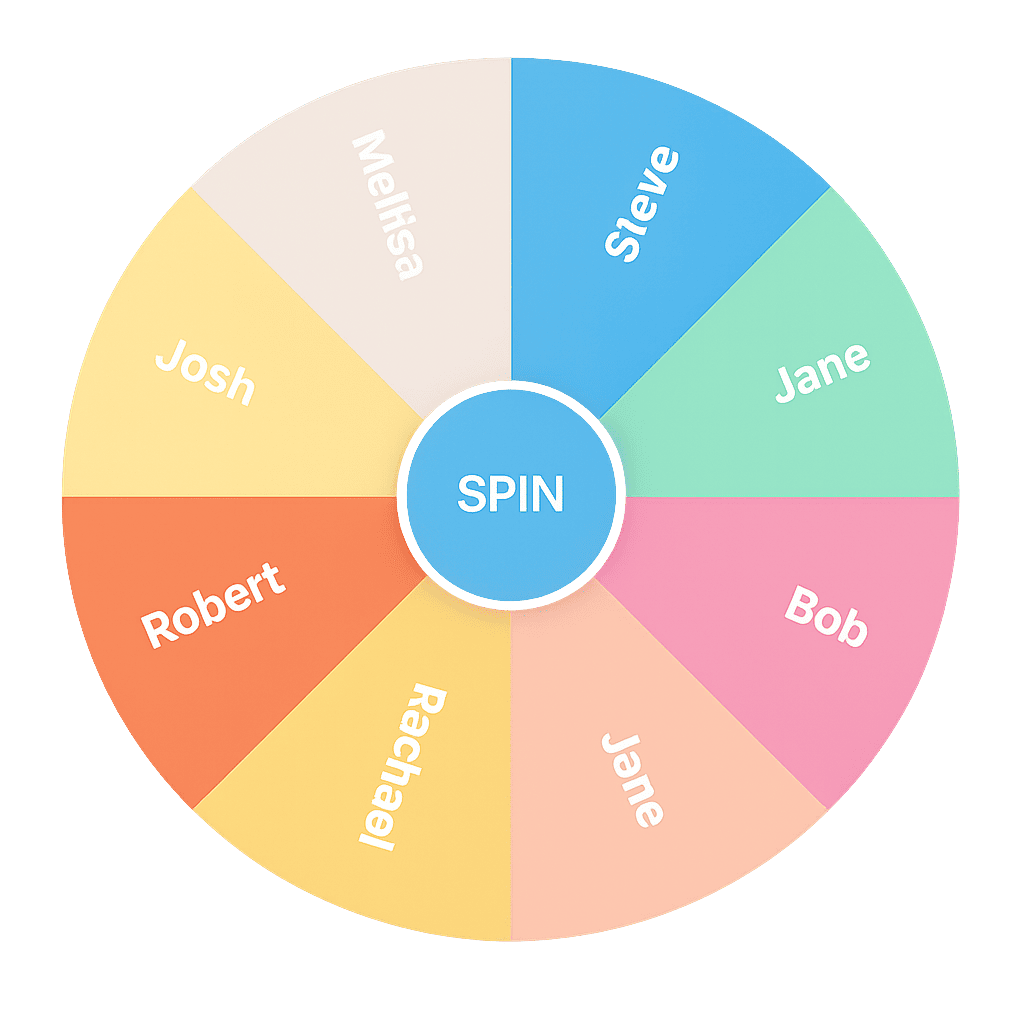
The Psychology of Randomness: Why Letting a Tool Decide Feels So Good
PickoWheel Team • November 21, 2025 • 4 min read
In a world overflowing with choices — from what to eat to which tasks to tackle first — our minds are constantly processing decisions.
And although it feels like we should be the ones making every choice, there's something oddly comforting about letting a random tool make the call for us.
But why?
Why does spinning a picker wheel, generating a random number, or shuffling a list feel so satisfying — even liberating?
The answer lies in the psychology of randomness, and understanding it reveals a powerful truth: sometimes, the easiest path to clarity is to stop deciding altogether.
The Hidden Weight of Constant Decision-Making
Every decision — big or small — demands mental energy. Over time, this builds up into decision fatigue, which makes us:
- Overthink
- Doubt ourselves
- Procrastinate
- Feel mentally drained
- Choose the “easiest” option instead of the best one
When we’re already overloaded, even choosing a lunch spot or selecting which task to start first can feel surprisingly difficult.
Randomness provides a shortcut. It bypasses the decision entirely — no stress, no overthinking, no self-doubt.
Why Randomness Feels Good: The Psychology Behind It
Randomness may look chaotic, but our brains interpret it in surprisingly beneficial ways.
Here’s why random tools feel so satisfying:
1. They Remove Responsibility From the Outcome
When you make a choice yourself, you carry the emotional weight of that choice:
- What if I pick the wrong thing?
- What if someone else gets upset?
- What if this is a waste of time?
Random tools eliminate that pressure. The picker wheel decides — not you.
It’s not avoidance. It’s liberation.
2. They Break the Loop of Overthinking
Decision loops often look like this:
“Should I pick A or B? What if B is better? But A has benefits too. Let me think again…”
A random generator interrupts that loop instantly.
The decision is made.
Your mind can relax.
3. They Feel Fair and Impartial
Humans are deeply sensitive to fairness.
Randomness:
- eliminates favoritism
- removes bias
- prevents guilt
- keeps group decisions transparent
That’s why teachers, managers, and workshop leaders love using team pickers and name spinners — everyone sees the result, and no one blames the person making the choice.
4. They Add an Element of Fun
There’s something playful about spinning a wheel or hitting a “Randomize” button.
It turns pressure into excitement.
If decision-making feels like a chore, randomness turns it into a mini-game.
This boosts dopamine — the brain chemical responsible for motivation and enjoyment.
5. They Reduce Regret and Second-Guessing
People tend to regret decisions they consciously make, especially if outcomes aren’t ideal.
But when a random tool picks for you?
We accept it more easily.
It feels like fate, luck, or “just the way it landed.”
This reduces anxiety and emotional friction.
Practical Ways Random Tools Reduce Stress
Randomness is more than a fun trick — it’s a practical strategy for simplifying life and work.
Real examples where random tools shine:
At Work
- Choosing a task from your to-do list
- Picking which idea to test first
- Assigning responsibilities impartially
In Classrooms
- Selecting a student to answer
- Creating fair teams
- Choosing topics for presentations
In Daily Life
- Picking meals
- Choosing weekend activities
- Deciding what to watch
Tools like PickoWheel make this effortless with:
- Picker wheels
- Team generators
- Random number pickers
When a tiny decision feels heavier than it should, randomness can lighten the load.
Randomness and Creativity: A Secret Boost
Randomness doesn’t just help with decisions — it boosts creative thinking.
When faced with unlimited possibilities, humans freeze.
But when given a random constraint, creativity thrives.
Writers, designers, musicians, and innovators often use random prompts to spark new ideas.
Randomness gives us a starting point — and that’s often all we need.
Why Letting Go Sometimes Means Gaining More
Letting a tool decide isn’t giving up control — it’s reclaiming mental space.
By outsourcing low-stakes decisions, you free up capacity for:
- strategic thinking
- creativity
- problem-solving
- long-term planning
- emotional clarity
It’s a small shift with a big impact.
Final Thoughts: The Freedom in Not Choosing
Randomness might look simple, but it taps into deep psychological truths.
- It reduces stress.
- It eliminates bias.
- It breaks overthinking loops.
- It helps us accept outcomes with less regret.
- It even sparks creativity.
In a world drowning in choice, randomness offers a breath of fresh air.
So next time you find yourself stuck between options, overwhelmed by micro-decisions, or tired of constantly choosing…
let the wheel spin and set your mind free. 🎡